Bring greater precision and consistency to your assays with high-performance cell mimic reference controls.
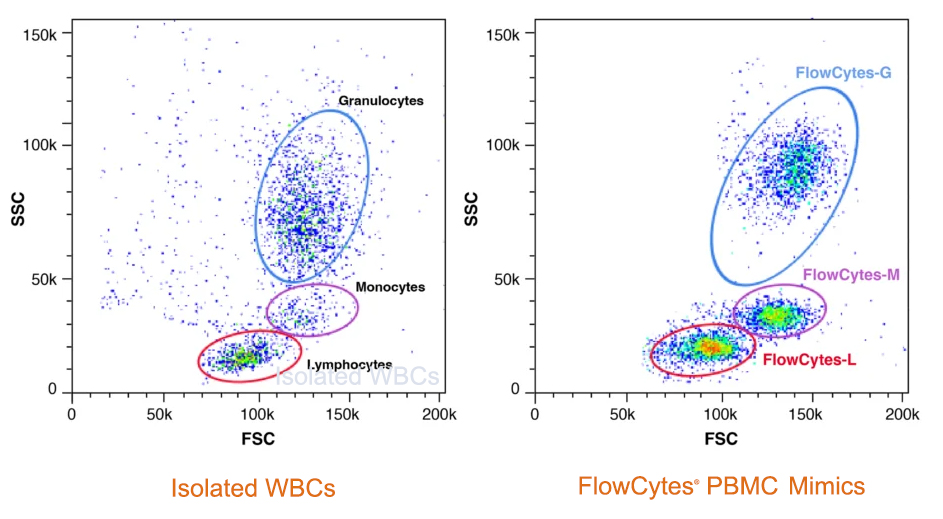
Leave behind the unpredictability of biological cells and the limitations of polystyrene beads. Our cell mimics provide greater stability and accuracy across the board:
Slingshot Bio cell mimics consistently outperform traditional controls — such as those that come from blood specimens or solid-core plastic beads — across fluorescence, light scattering, and biomarker compatibility. No cell culture, no donor variability—just ready-to-use reliability.
Biological Controls

Polystyrene Beads


See how Slingshot and Cerba Research worked together to develop cell mimics for Ki-67, a critical protein in cancer research. With our mimics, Cerba validated assays with greater accuracy and reduced variability compared to live cells.
“We’ve integrated Slingshot cell mimics as crucial controls in several of our flow cytometry workflows. Whether in assessing cell viability or managing compensation and unmixing, these off-the-shelf controls seamlessly slot into our processes. This enhances our workflow efficiency without having to compromise on data quality and reliability.”
Dr. Veronica Nash | US Regional Head of Flow Cytometry
Cerba Research


See how we helped Prolocor design the ideal control for their platelet FcγRIIa precision diagnostic test that quantifies FcγRIIa on the surface of platelets to guide clinical decision making.
“Clinicians need better tools to guide decision making on the choice of antiplatelet therapy in coronary artery disease patients, particularly after coronary stenting. The Prolocor pFCG® test will be an important asset as we tailor antiplatelet therapies to balance thrombotic and bleeding risk.”
Dominick J. Angiolillo, MD, PhD, FACC, FESC, FSCAI | Professor of Medicine, Chief, Division of Cardiology, Director, Thrombosis Research Center
University of Florida, College of Medicine-Jacksonville.


See how we partnered with Fred Hutch CPF QC to engineer custom CD3 T cell mimics with varying percentages of expression of the common CAR transduction marker epidermal growth factor receptor (EGFR) to validate their CAR T cell flow cytometry assays.
“In our search for reliable controls for cell therapy assays, partnering with Slingshot has been a game-changer. Together, we addressed significant challenges by engineering custom CD3 T-cell mimics.”
Amina Kariminia, Ph.D. | Immunologist, Analytical Development Scientist
Fred Hutch Cancer Center
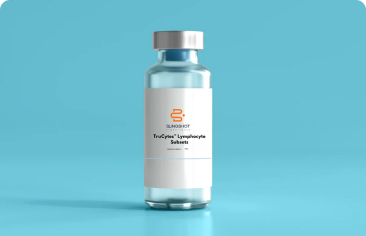
TruCytes™ Biomarker Controls
Mimic and quantify specific cell types and their functions with customizable proteins.
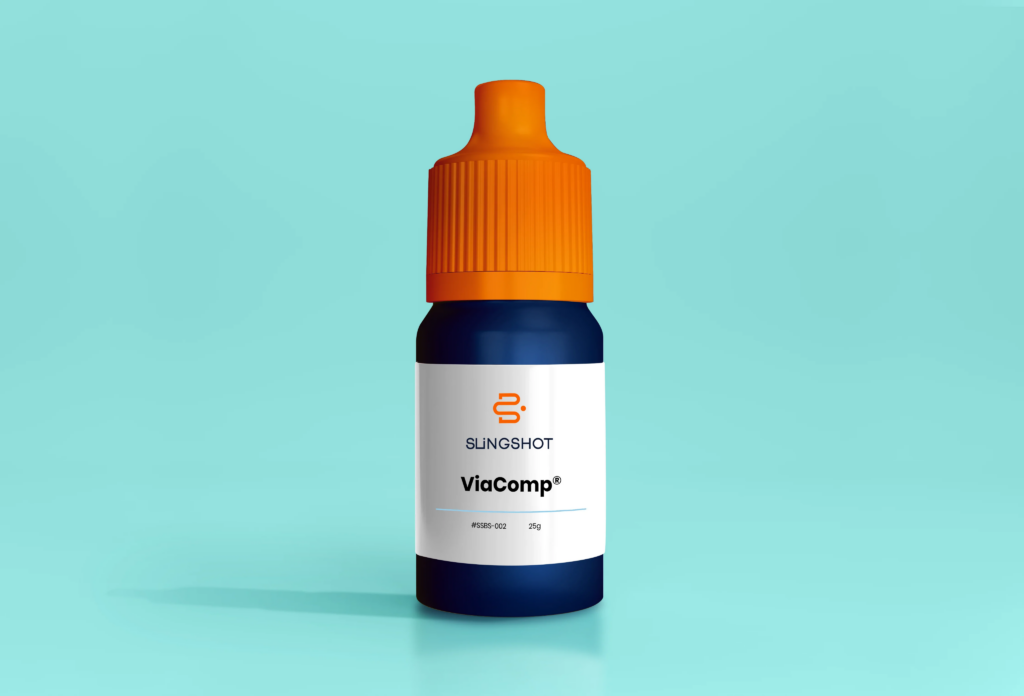
ViaComp Cell Health Controls
Assess cell viability with controls for DNA intercalating and amine-reactive dyes.
SpectraComp Compensation Controls
Achieve superior compensation and unmixing controls, staining like real cells.
FlowCyte Calibration Controls
Set new standards for instrument calibration and traceability.
Our polymer-based cell mimics are fully customizable, engineered to replicate specific cellular characteristics for precise control in every assay.
By using this website, you agree to the storing of cookies on your device. These cookies are used to collect information about how you interact with our website and allow us to remember you. We use this information in order to improve and customize your browsing experience and for analytics and metrics about our visitors both on this website and other media. To find out more about the cookies we use, see our Cookie Policy.
flow cytometry, facs sorting, cell sorting, flow cytometry test, flow cytometry instrumentation, multicolor flow cytometry, flow cell, cytometer, imaging flow cytometry, flow cytometry analysis, flow cytometer, flow cytometry data, attune flow cytometer, facs cell sorting, flow cytometer price, attune nxt flow cytometer, attune nxt, cytometry, cell cycle analysis, synthetic cell, artificial cells
flowcytes, slingshot company, slingshot, mimics flow
Cell mimics offer numerous advantages in flow cytometry, primarily by providing consistent and reliable results. Unlike traditional biological controls that can vary based on donor factors, cell mimics eliminate this variability, ensuring that researchers obtain uniform data across experiments.
For instance, using Slingshot's cell mimics allows laboratories to focus on their specific research goals without the uncertainties associated with biological samples. This stability is crucial for applications requiring high precision, such as clinical diagnostics and drug development, where reproducibility of results is paramount.
One of the standout features of Slingshot's cell mimics is their customizable nature, which allows researchers to tailor the mimics to their specific experimental requirements. This adaptability ensures that the mimics can be equipped with various biomarkers, proteins, and fluorescence characteristics suited to different applications.
For example, a researcher studying a particular cancer cell type can customize a cell mimic to express relevant antigens, thereby creating a more accurate model for testing therapeutic responses. This level of customization not only enhances the relevance of the experiments but also improves the overall efficiency of research workflows.
Understanding the differences between cell mimics and traditional controls is essential for researchers looking to enhance their assays. Traditional controls often suffer from issues like donor variability and short shelf life, making them less reliable over time. In contrast, cell mimics are designed for longevity and consistent performance.
Moreover, studies have shown that cell mimics outperform traditional controls in various metrics, including fluorescence intensity and biomarker compatibility. This comparative analysis highlights the importance of adopting advanced cell mimic technology for researchers aiming to achieve superior assay performance and data integrity.
Cell mimics are increasingly being utilized across various clinical and research settings, offering solutions for a wide range of applications. From cancer research to immunology, these mimics provide researchers with a reliable platform for testing and validating their hypotheses.
For instance, in clinical trials, cell mimics can be used to simulate patient responses to treatments, allowing for more accurate predictions of therapeutic efficacy. This application not only speeds up the research process but also enhances the safety and effectiveness of new therapies before they reach the market.